
Help locating record slovak ancestors... likely in church slavonic books

I'd love to find baptism and/or marriage records for a set of slovak ancestors.
Husband: https://www.familysearch.org/en/tree/person/details/PMGZ-1C9
Janos Donjics (born circa 1818 Laborcz-Volya)
Wife: https://www.familysearch.org/en/tree/person/PMGN-6B7
Zsuzsanna Hanusov (born about 1825 Natafalva)
I know they have at least child - Maria, born 14 June 1851. Their 1869 census record only lists Maria at home.
I can sometimes get by when other languages at least use the latin character set. But I struggle with the Cyrillic alphabet/Church Slavonic and haven't been able to locate any other records on them.
Any help appreciated! Thank you!
의견
-
Hello-
Where did you get the birth dates for the parents? From the 1869 Census?
Be aware that Census ages can be incorrect. In my use of the 1869 Census from the western side of Slovakia, near the Czech border, it's not unusual to find ages that are 10 years off from nearly 100% certain birth records.
The 1816-ish baptism records for Vola appear to be in Latin form and Latin writing. I took a brief look. I started in 1816. On page 21/185, third record down on left page, there is a pair of twin girls with last name of Donits. I didn't find anything else skimming quickly up to 1823. The records are quite messy. What I would do would be to write down every Joannes' birth record I found, the date, and his parents's names, so I could rule out the ones with incorrect last names.
I would use Cisarik.com to help me figure out names I don't recognize. Links below are to Cisarik.com webpages for your two villages.
https://www.cisarik.com/0_Vola_Michalovce_KI_Zemplen_Zemplin.html#more_surnames
https://www.cisarik.com/0_Nacina_Ves_Michalovce_KI_Zemplen_Zemplin.html
Do we guess that there were older children? Or do we think Marija was an only child because her mother was rendered infertile due to childbirth? If she was a first and only, the wedding date should be 0-2 years away from her birth date.
I looked at the Marriage Records for Vola for 1842-1852. I found records for 2 Ilona Doncics and 2 Michael Doncics (on pages 89 - Ilona, 94 - Ilona, 97 - Mihaly and 100 - Mikhail of 231). I did not find your couple during this quick skim. It's possible they were married before this time period (when there aren't any records). They shared a parish based on Cisarik.com, so it's not like we should be looking in another parish's records due to wedding in the bride's village.
One thing that might be possible is that the Greek Catholics were double logged in another religion's books…you could try for that. In the 1700s, there were some double entries in the town I'm studying, because it was controlled by a Catholic church (official state religion). The parishioners were known Lutheran worshippers and they sometimes got baptized or married outside of the area at their Lutheran church and it got logged in the Catholic church record at home.
Also note, based on Cisarik.com, there were Donicsovas in both village phonebooks in 2005.
1 -
Yes, the birth years for the parents came from the 1869 census. I don't have any other information for him.
I did find her 1892 burial record in the greek catholic registers for Őrmező/Strážske, she was listed as 78, which would put her birth year at 1814. I'm not sure how accurate those figures are. Maria was within 2 years of her census age. But yeah, birth years for parents can be more inaccurate.
Janos is mentioned in the burial record, but it's unclear if she widowed him or she was a widow. Link in case you might have better luck: https://www.familysearch.org/ark:/61903/3:1:S3HT-DY39-KD6?view=index&personArk=%2Fark%3A%2F61903%2F1%3A1%3A6N9W-43CX&action=view&cc=1554443&lang=en&groupId=M9S7-VGYI have not yet found a burial for him.
The daughter Maria's marriage was also in a Greek Catholic register, and she's listed as Greek Catholic in several of her children's Roman Catholic baptism records. Interesting enough, I believe all of her daughters' baptisms were performed in a Roman Catholic church.
I unfortunately have no idea if there are other children. I have no other clues to go by and indexed records seem to be rare here.
If the records are in Latin, I will take a look in the morning tomorrow.And actually, taking another look, the census might actually list Zsuzsanna as Roman Catholic, with Janos definitely as a Greek Catholic.
Thank you for your help!0 -
I think I found her. Listed as Zuzana Hanuso, baptism 24 Oct 1824. Right side, a little past halfway down:
https://www.familysearch.org/ark:/61903/3:1:S3HY-DR83-YFD?view=index&personArk=%2Fark%3A%2F61903%2F1%3A1%3AV177-TKN&cc=1554443&lang=en&groupId=M964-SVS&action=view
I think the town is listed as "Nataf."
0 -
Hi - I am about to go on a vacation so don't have much time to write. You might look for the marriage record in the bride's church then.
If the bride was born in 1824, she likely didn't marry before the age of 16 and was married by the time her baby was born in 1851 (so look from 1840-1851). You could look for siblings in either church. 27 is a bit old for a first baby. In the hundreds of people I looked at in Western Slovakia, very few women were totally infertile (miscarriages were recorded, that might not be true of the churches you are looking at - but you might check "deaths" as well as the baptism record…because miscarried babies were not baptised.). There were occasionally women that had a long series of miscarriages (probably poverty or a genetic/blood factor). My guess is that there might be an older or younger sibling out there somewhere. The marriage year will help with that.
The interplay between these varieties of Catholicism was complicated back in the day, and practices in the US differed. Be aware of that also. However, people would sometimes go to the "only" church if they couldn't find a perfect option. For example, my Slovak Lutheran relatives went to a German/American Anglo-Colonial Lutheran Church until they started their own Slovak Lutheran Church.
I will check this thread in a week or so and see what you've posted that's new. I live with someone who can read Cyrillic (though Slovak variants are not exactly modern Russian Cyrillic). I can ask for some help.
1 -
I found another child of theirs, which led me to discover someone else had mapped out a whole family.
First child born May 1842, which would have put her (Zsuzsanna Hanusik/Hanusov) at 18: https://www.familysearch.org/en/tree/person/GRPD-6BW
Enjoy your vacation!!
0 -
I can't prove it, because I don't speak Hungarian, but I think Zsusanna was a widow. That would make the most sense with the position of her name and the widow word in there. I have also dealt with Hungarian records in Western Slovakia, and when an old widower (man) died, sometimes they didn't mention his wife's name. Just marked him a widower. It was far more important to notate who a woman was connected to. A man was a patriarch and more of a stand-alone person/household head/owner.
Also possibly she was younger than him, and women often outlived men back then (just like today). Maybe you should consider whether he had a first wife and other children. It's worth ruling out. My approach has been to strip mine records for everything related to a surname and work it out from there. It seems there were multiple families of Doncics living in Vola at the same time during the life of your research subject. I have a handful of people I've researched where the man married three times.
1 -
Ok, so I was able to find their marriage record, bottom right: https://www.familysearch.org/ark:/61903/3:1:S3HT-6LNS-1YD?cat=712222&i=52&lang=en&cc=1554443
I don't think it indicates if they were single or widowed. It does confirm she was Roman Catholic and he was a Greek Catholic and their hometowns. It does not indicate parent names or ages.
I also looked through the church slavonic books and found a few possible matches for other children. Could use translation help to see if any of them are a match.
1852, midway down left page, 15th of the month: https://www.familysearch.org/ark:/61903/3:1:S3HY-68K3-PKZ?cat=758424&i=35&lang=en&cc=15544431853, 1st on the left: https://www.familysearch.org/ark:/61903/3:1:S3HY-68K3-5D5?cat=758424&i=37&lang=en&cc=1554443
1853, 2nd row: https://www.familysearch.org/ark:/61903/3:1:S3HY-68K3-P6N?cat=758424&i=41&lang=en&cc=1554443
1856, bottom row: https://www.familysearch.org/ark:/61903/3:1:S3HY-68K3-P2S?cat=758424&i=53&lang=en&cc=1554443
0 -
I reviewed the wedding record. It does not say if they were single or widowed.
There is an interesting column "Conditio" where regular people are denoted as "plebea" which would probably mean ordinary peasants. If the word does not appear, there is a symbol which means "same as above". Yours are "plebea". A few are marked something else, including Zingari (gypsy) or Neo-Coloni (some upgraded farmer type) or Nobilis which according to info elsewhere on this site might mean tax-exempt vs. truly "noble".
Note that the family name of the witness "Lepahuska" is a family name of interest to the female FamilySearch researcher who assembled the Doncic family you found. I Googled and it seems that person is using their real name and their address is findable on the web. I would suggest trying to contact that person in multiple ways. They may be your relative. Or a descendant of a "friend and countryman".
1 -
Adding on - I reviewed the tree again. Anna Dojnics, the oldest daughter, married into the Lepahuska family. So she married into the family where one of them was a wedding witness for her parents (likely friend of the groom).
0 -
I am now going to comment on the births you asked about.
But first I'm going to post this chart on modern Cyrillic cursive so you can reference it.
https://golearnrussian.com/russian-cursive/
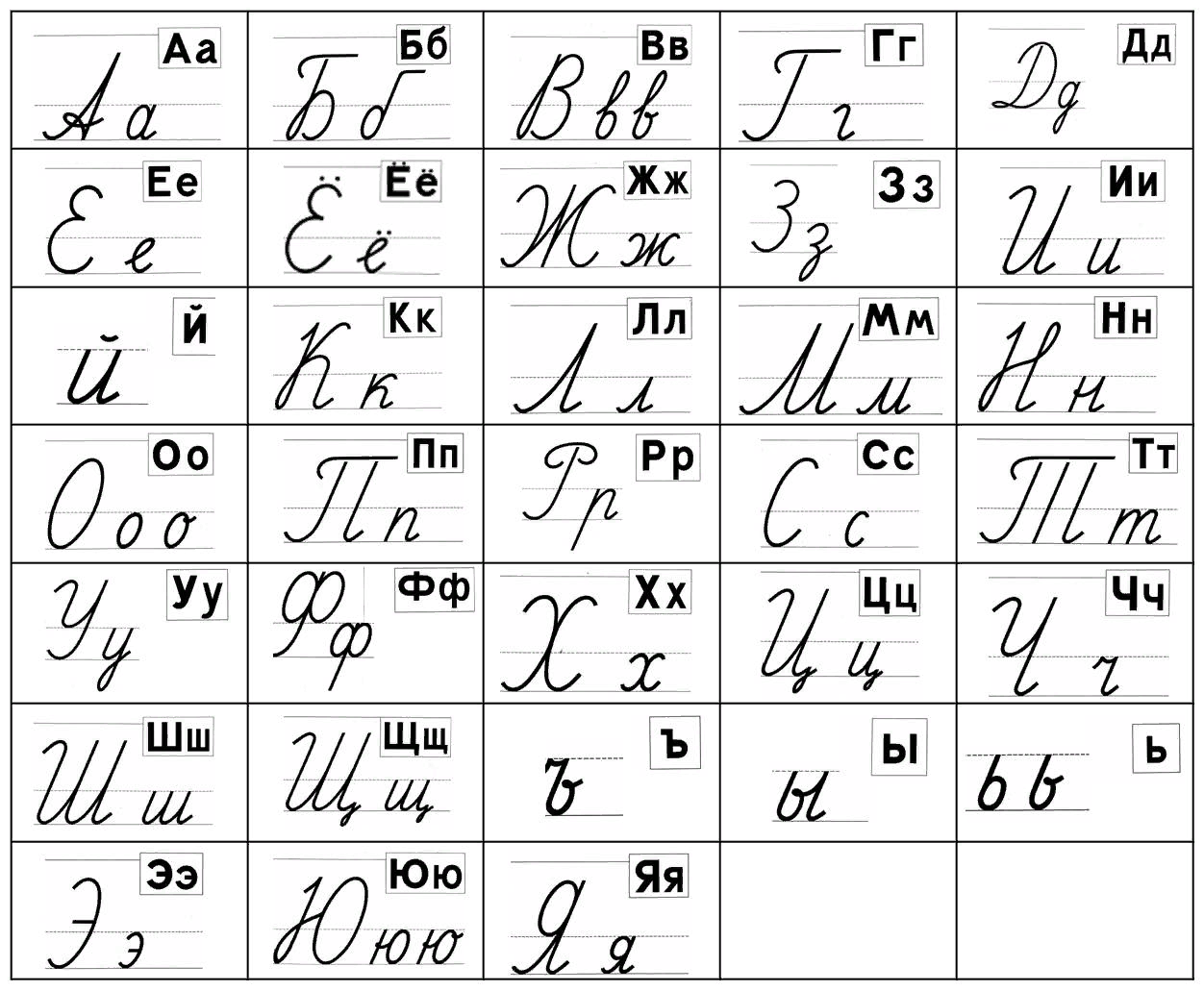 1
1 -
Going from memory, here's my explanation of the sounds (probably a little wrong but good enough for what you need to do).
Ah, Beh, Veh, Geh, Deh
Yeh, Yoh, Dzeh, Zeh, Eee
Eeeyuh, Kay, Ell, Emm, Enn
Oh, Pay, Err, Ess, Teh
Yeh, Eff, Kh, Tseh, Cheh
Shuh, Shuchuh, then three sounds not easily explained in English (the middle one that looks like 61 sounds like oowhee)
Eh, Eyoo, Ya
Notice that what looks like a big capital B actually sounds like "V". Also the fifth letter that looks like a Greek Delta's lower case form looks like "g" but sounds like "D". What looks like H actually sounds like "N". And what looks like P sounds like "R".
So in the language of the Doncic family, I'm seeing this for their names.
Janos Doncic
Janos in Hungarian - in some Slavic form - J letter that does not look like modern Cyrillic, O, A, the letter that looks like H but actually sounds like N, and the soft sound letter (which is not lower case b) and just changes the sound of the N. This name might sound a bit more like Johann or Jan. The -os is Hungarian and doesn't exist in this language.
Doncic - D letter that does not look like modern Cyrillic capital D, but instead like a big version of the lower case g, O, the Eeyuh letter that looks like a U with a line over it, the looks like H letter that sounds like N, the Eee letter that looks like a U, a T, and then a soft sound letter. So to me, with my rough grasp of sounds, this name sounds a bit more like Doinits.
I won't write out Suzanna's name in full detail but basically it "looks like" Zuzahha Gahu(shuh letter that looks like a trident)ukb. And is pronounced close to Suzanna Hanusik.
0 -
Regarding the births you asked about, first examine the existing births. Across all of the girls already identified, the godfather is Mihaly Lepohuska. He is also the godfather of one of the births you found. There is a change in female godparent. For 1842 Anna, 1845 Maria, 1849 Suzanna, the godmother is Maria Duczaya (ending letter ambiguous, but perhaps "ya", if not that, then it's probably a "k"). Then 1851 Maria and 1862 Suzanna have a godmother named Elena Rudanna or Rudanyi.
So let's analyze these births:
1852, midway down left page, 15th of the month: https://www.familysearch.org/ark:/61903/3:1:S3HY-68K3-PKZ?cat=758424&i=35&lang=en&cc=1554443
1852 - August 15 is not a match. The parents' names are close to Joan Bacimko (Vasimko) and Suzanna Galimka. The godparents do not match. You were probably keying in on the first names - but the second names do not match. Try to match both names as best you can.
1853, 1st on the left: https://www.familysearch.org/ark:/61903/3:1:S3HY-68K3-5D5?cat=758424&i=37&lang=en&cc=1554443
These names are hard for me to read, but beyond parents' first names, nothing matches.
1853, 2nd row: https://www.familysearch.org/ark:/61903/3:1:S3HY-68K3-P6N?cat=758424&i=41&lang=en&cc=1554443
I believe baby Mikhail, born November 19, is a fit. The parents' names are correct and the godfather is Mihaly Lepohuska. The godmother is Elena Ondoba (likely said Ondova). There's a possibility she is the same as Elena Rudanyi.
1856, bottom row:
https://www.familysearch.org/ark:/61903/3:1:S3HY-68K3-P2S?cat=758424&i=53&lang=en&cc=1554443
I believe this child is also a fit. His name is the same as the father's (Joanb, where b is that soft sound). The godparents are different, but, the godfather has the same last name as the Elena godmother. His name is Stepan (a "C" makes an "S" sound) Rudanb which is probably the male form of Rudanna. The godmother is Anna Bantsova (the internal b is actually lower-case "v"). The letter that looks somewhat like "T" with a b glued to it is capital "B" in Cyrillic.
I apologize if any of this is confusing. I had some coursework in Russian and I'm trying to transfer this knowledge to you without going through the kind of technical explanations that a much more educated in Russian and precise person would give. Hopefully this is useful as you come up the learning curve. Always keep in mind that regional handwritings and pronunciations can differ a lot. My ancestors in Western Slovakia spoke a unique dialect of Slovak with influences from several nearby areas and their own unique vocabulary. A lot of genealogy work on old records is like trying to decode medieval English without a dictionary or an expert handy.
1 -
Thank you!
I'm curious if there's any significance of Mikhail vs Michal? Or if it's just the Church Slavonic spelling for the same root name? Or Zuzahha GahuШukb vs Suzanna Hanusik? What name would they have likely gone by in their life? The slovak spellings, right?
Also, in other records I've studied, the godparent names have not been consistent and I have not paid much attention to them. Have you found they are generally consistent for the same parents?
0 -
Regarding godparent names, yes, I've seen a lot of consistency. In some cases, it's the only way I can sort out and associate sets of children with their parents. The town I am researching had very limited given and surname variety which makes things very hard. Where you have a couple Doncic families, I might have 5 or more with similar names. One of my 1869 Census households had three families at the address, and that included 3 boys named Jan that are only a few years apart, and I'm descended from one of them. So I have to look at addresses and godparents and birth spacing and mother's age. Any clues that are still extant.
The town I am researching in Western Slovakia was primarily a farming community with a little market village in the center. It was healthy and growing from the late 1700s into the 1850s. Then they started having more political problems with the Hungarian overlords and rebelling against them. The people lived in little hamlets of relatives and neighbors with aligned farm fields. In many cases, the godparents can be shown to be near neighbors and relatives, which makes sense. Those were the people in your mutual aid society because of the proximity. So there was a lot of stability. I would expect stability of godparents to mean that: 1) people stayed alive and didn't die young, 2) they didn't leave their farm to emigrate, and 3) there were no economic problems driving emigration. If your area didn't have stability in godparents, there probably were problems in the public health, the weather, the economy, etc. In my town, the godfather and godmother were often married to each other, but the wife's maiden name was recorded in the baptism record. That may or may not be true in your town. Practices varied.
1 -
James, you wrote: "I'm curious if there's any significance of Mikhail vs Michal? Or if it's just the Church Slavonic spelling for the same root name? Or Zuzahha GahuШukb vs Suzanna Hanusik? What name would they have likely gone by in their life? The slovak spellings, right?"
I think you should investigate whether these relatives were Slovak or Rusyn. These links below may help.
https://c-rs.org/
https://www.youtube.com/@carpathorusynsociety
https://foundationsource.com/client-stories/client-profile/a-conversation-with-maria-silvestri/
https://www.youtube.com/playlist?list=PLOyZCzi_H55HZY2s8Ywe2wAh4cY6oL53f
https://www.kasigarda.sk/en/kasigarda-2/
If they were Rusyn, then the spellings would not technically have been Slovak. I am not qualified to tell you if the Cyrillic in the recordbooks is Rusyn or Church Slavonic or what. But Slovak was officially written in the Latin alphabet. Susanna Hanusik might not have been literate anyway. In that case it's only relevant how she pronounced her name. And you can't necessarily determine your ancestor's accents based on how someone wrote down their names…it also depended on the language/sound sensitivity/spelling standardization of the person recording. There are clues in your records for an expert Slavic linguist but I am just a beginner and can't tell you definitive information.
The difference between hard "G" Ganusik and "H" Hanusik is a typical difference between Russian and Ukrainian. But I don't know where Old Church Slavonic, Slovak, Ukrainian, and Rusyn are similar or different on this matter. And I'm not sure the "G" was really hard in her name even with that letter there. My point in typing the Cyrillic out into Latin alphabet letters was to show you that the sounds were pretty similar.
Regarding Mihaly (Hungarian) vs. all the various Slavic variants…the peoples under Hungarian control were probably a bit bilingual up until the formation of Czechoslovakia after WW1, and beyond depending on where they lived. The Rusyn immigrants in my in-law family definitely knew some Hungarian and also played Hungarian/Slovak musical styles (Romany/Gypsy violin is considered more Hungarian than Slovak). In some of the poorer areas, I would imagine if there was any public, secular education, the Hungarians would have pushed for Hungarian language instruction. And people would have had to use Hungarian to interact with the government. So, I suppose to the extent that they were assimilated with the Hungarian power structure, they probably spoke more (merchants, local government officials, etc.). The clerics were obviously able to switch to Hungarian when they were told to record in Hungarian, but switch back out when the political winds changed.
1