Transcript Edit Function

In looking over FTS result today I find a feature to edit the transcript
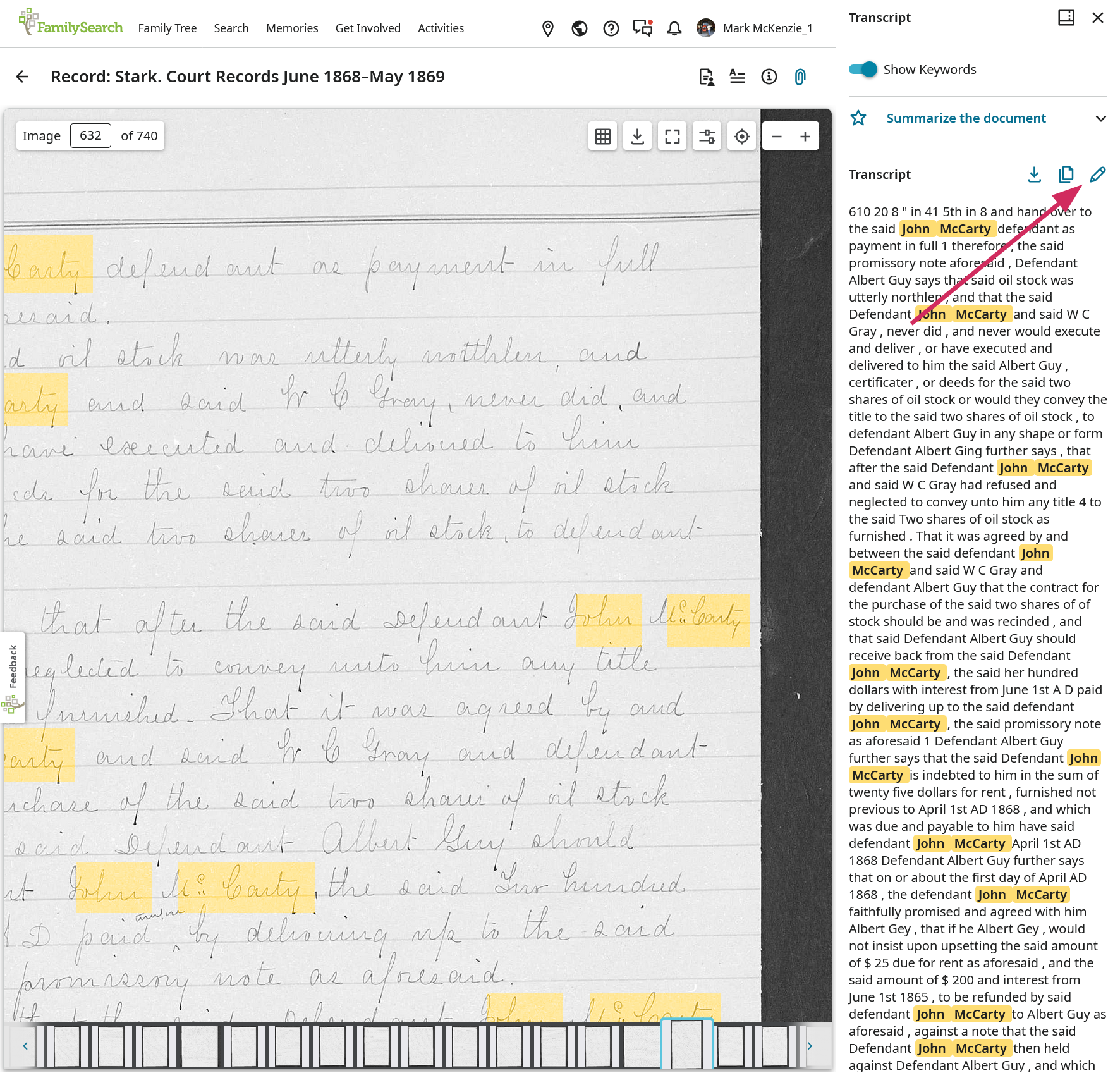
Upon selecting text in the Transcript you can edit as desired
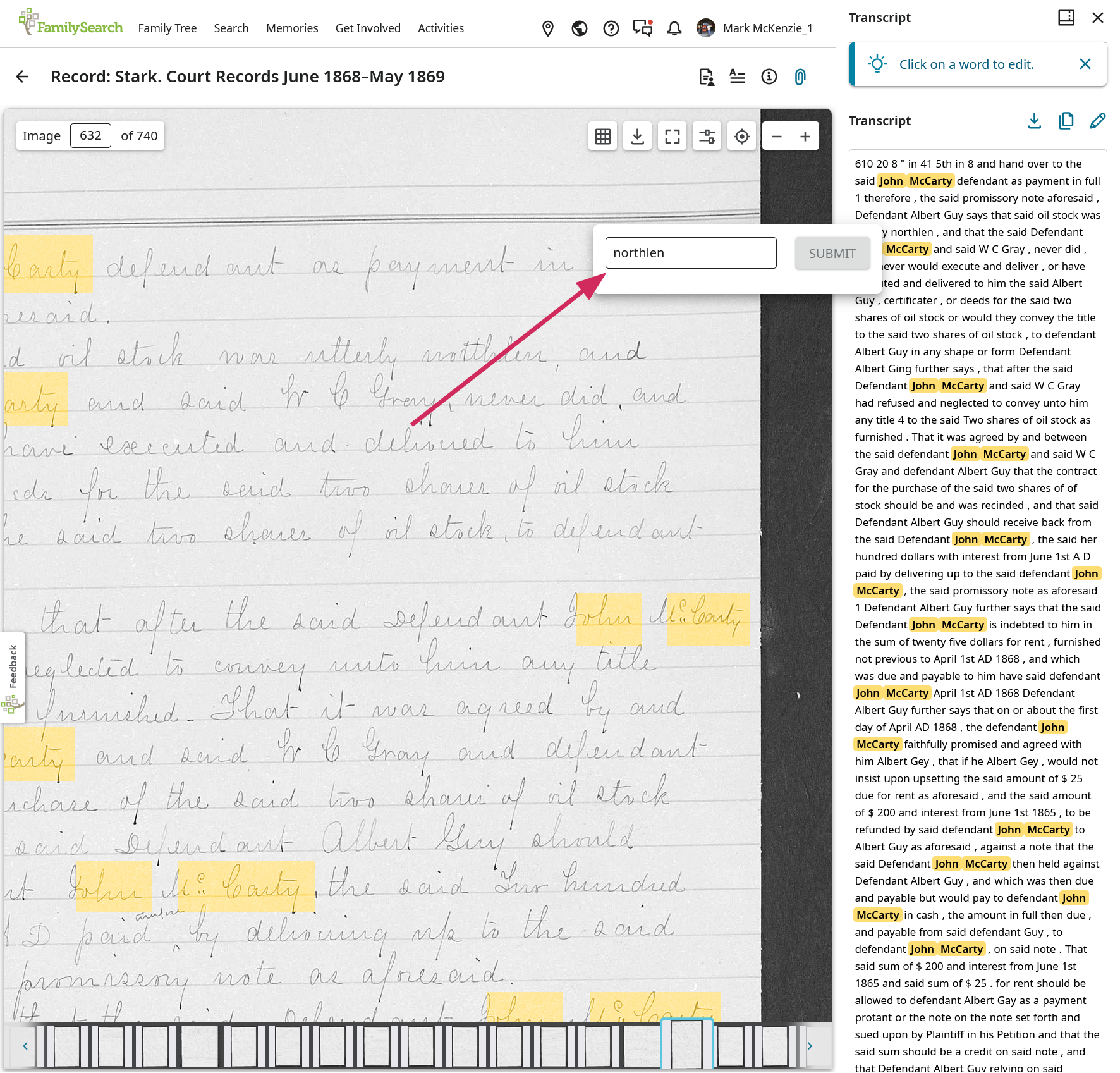
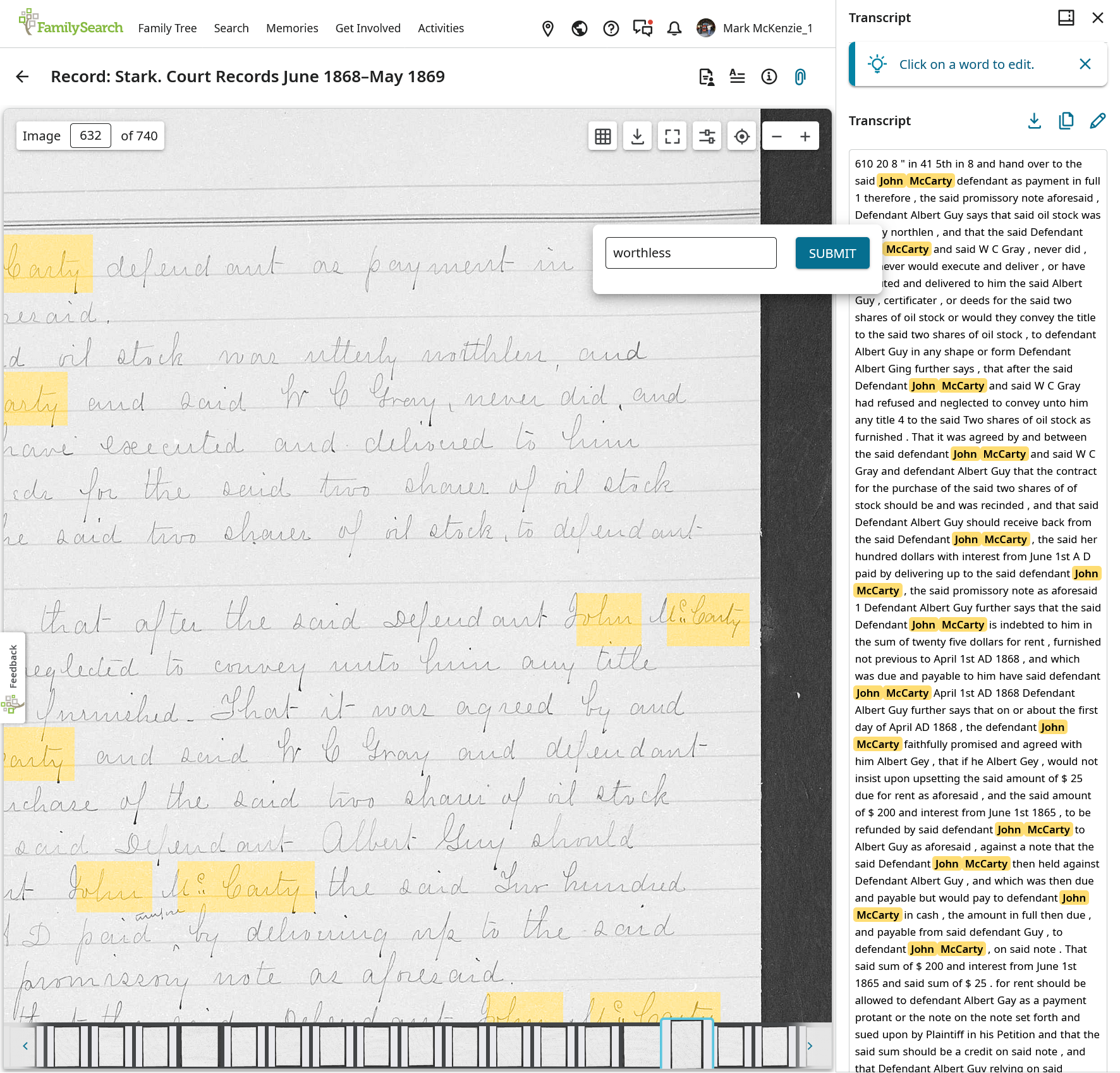
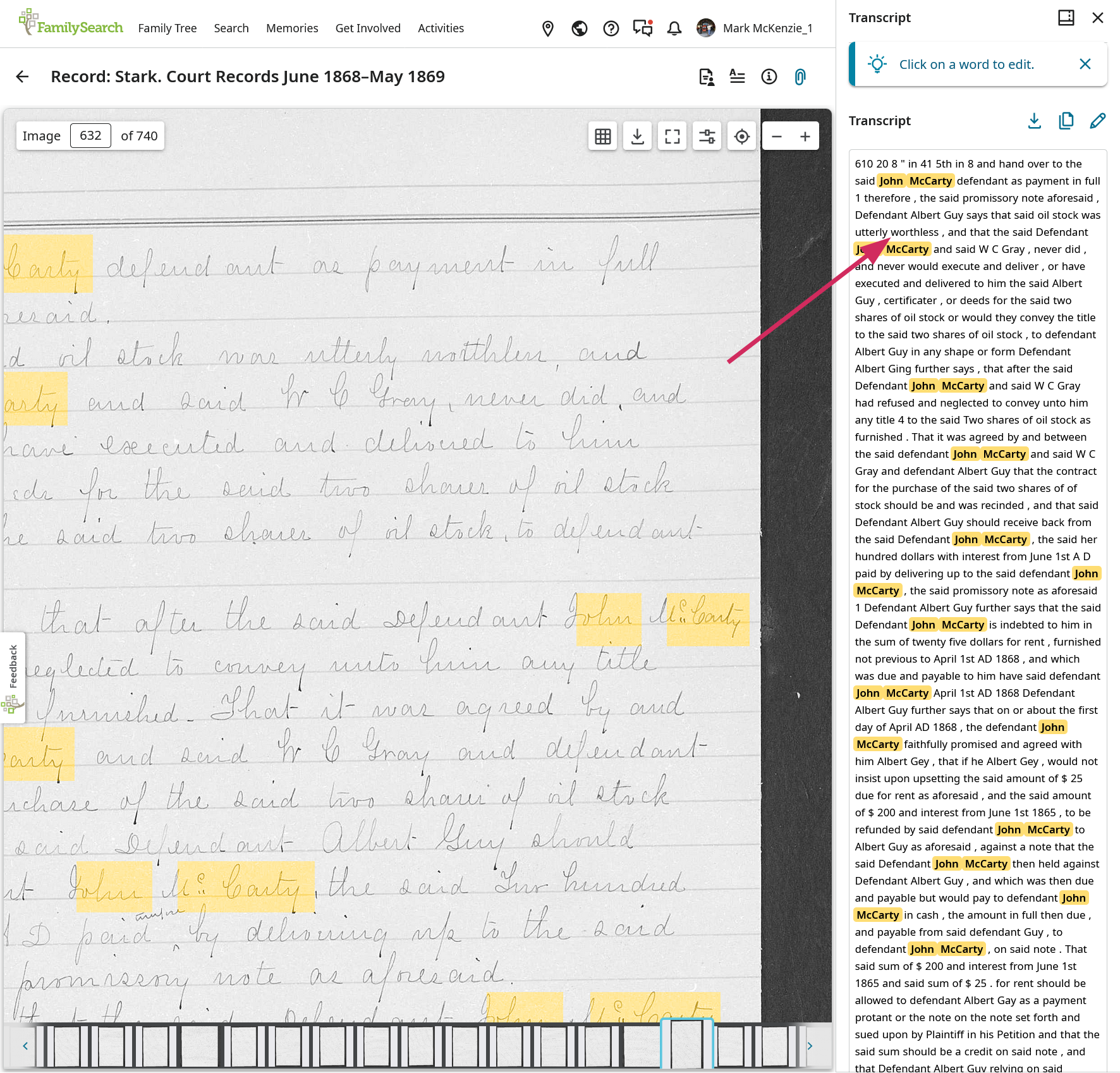
If I copy the modified text to the clip board the change is reflected. Upon performing subsequent FTS the modified text also appears to be saved.
I am curious if my edit will be seen by anyone else. This FTS query should get you to the image.
I think changes made this way will impact not only the displayed transcription but will also change what results you get using the old vs new wording as a keyword phrase… e.g. +"utterly northlen" will no longer generate any results. Probably not just for me but for anyone….
I've got mixed feelings on this… On one hand this seems like a good idea to get a human addressing 'perceived' errors in transcription and potentially improving search results. But then again, if I changed the text to read something totally wrong, it would cause FTS results to be badly impacted. Kind of like Family Tree 'merges' that are easily facilitated then come to find out it makes a mess of things
Comments
-
@Mark McKenzie_1 That is a great find. I will be trying it on the next chance I get.
0 -
I am able to see the "worthless" change 😀
0 -
@Mark McKenzie_1 and @sc woz I am sure you both know that in the "olden" days of web indexing, it was drilled into our heads to "type what we see" and NOT change misspellings, odd words, or make changes to something we as indexers believe might have been implied by the original author. I believe that AI was taught using the same rules. Without any disrespect intended, why are you/techsavvy/engineers now changing the rules when you/techsavvy/engineers could find a way to provide text corrections in the same fashion as you do "alternate names" on person cards? Please, not all of us users have the same skills or educational levels and some of us believe that, at the rate the world is progressing, future family historians/genealogists make not have any "education" at all😂
0 -
Full Text Search is pretty new at learning how to 'read' something written in a cursive form and then creating a transcript that must use modern 'computer' text
There are lots of styles and variations when it comes to handwriting and even humans may interpret the same word differently depending on their individual experience with a particular handwriting 'style'.
For example, to me this says 'State of Miffouri' but to someone else, experienced with this style of handwriting, would correctly tell me this says 'State of Missouri'. We each have interpreted the same handwriting differently.
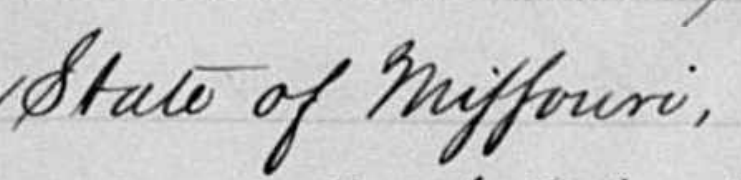
But what we are dealing with is a computer [with not so much in the way of experience] taking a look at this handwriting and transcribing it as Miffouri and a human looking a the same handwriting and coming to a completely different conclusion as to what the word is.. Each are transcribing 'what they see'. It's just that one has more experience than the other.
So why does it matter? Full Text search combs thru its computer generated transcripts and looks for the text you've entered as a search item. I pulled this example from a record image processed by Full Text Search. It has transcribed the third word as "Miffouri".
If i had asked for FTS to find the word "Missouri" it would not return this image transcript as a search result. That's because the word "Missouri" does not appear in the transcript. The word "Miffouri" however does.
Unless you specify otherwise, FTS search looks in its database of transcribed images for the EXACT text you entered as a keyword.
By having an 'edit' feature it is possible to modify the transcript that resides in the database. If I CORRECTLY edit the text so that the transcription reads "State of Missouri" any subsequent searches that include the keyword "Missouri" will return this image result whereas prior to the manual edit it would not.
That I consider a good thing, especially if the edits may also be used to 'train' the software. By making an edit we get the immediate benefit of better search results and potentially the longer term benefit of a better handwriting recognition algorithm.
However…. as I mentioned in my previous post a 'bad' edit can really hose things. Edits DIRECTLY impact FTS results either for the better or potentially for the worse
3 -
@Mark McKenzie_1 Thank you so much for your detailed explanation - I had not thought of the cursive difference between "ff" and "ss" - one thing I have learned is that I personally am constantly learning and sometimes relearning —- thanks again and have a Happy Thanksgiving 😎 ps I also didn't know about hose but I looked it up — thanks
0 -
@maryellenstevensbarnes1 Glad that you found the info useful. I am not all that comfortable with FamilySearch letting us all freely 'modify' the various, underlying data within their Full Text Search database. In the case of Full Text Search it can really help improve results if I correctly 'fix' a transcription, especially a given name or surname as those keywords are what we all typically use in our searches.
So if I do an edit 'right' it helps you find a record, but if I do it wrong you may never find the record using Full Text Search. Not unless someone subsequently views the same record image, sees 'my error' and corrects it.
Full Text Search is really unique in that it searches for words/text and not records. So if the word isn't what it should be in the database, that error is not easily found unless FamilySearch creates a newer/modified handwriting recognition algorithm and re-processes all the images.
For the moment at least, I think the benefits of a human 'edit' outweigh the potential negative effects. I just need to be doubly careful when I do make one… Enjoy your Thanksgiving as well!!!
2 -
@Mark McKenzie_1 I agree on modification freely😎
0