What if multiple names of the same referenced person are spelled differently?

Its pretty easy to see it as a spelling error from these three, but I felt it was an important question.
Answers
-
@AnthonyHopkins5 - in the time honoured fashion… "It depends…."
One important point is that a normal search will look for variations of the input name when you launch a search. For instance, if I launch a search in the Historical Records for "Samuel Pickstock", it will pick up "Saml Pickstock" as well as "Pickstoch", "Picksteck", "Pestock", etc, etc.
So if my 3G GF, the said Samuel Pickstock, appears in the Historical Records with different spellings of his name, there is no need for me to try and second guess what those variations might be. Just enter him as "Samuel Pickstock" and I can launch successful searches from his profile, no worries.
Another example from my lot is the surname "Healow". At one time, I carefully entered the spelling variations as Alternate Names until I thought - "This is a waste of time". Firstly I've already found the records with the different spellings, and the next record might be yet another variation that I haven't got. Secondly, and this is important - if I did that, I'm not recording information about my relatives (they didn't write their own names), I'm recording information about the parish clerk's abilities to hear and spell the names. So I standardised on a single spelling from then on.
But… Where different spellings become significant in some fashion, I might record both against one person. For instance, a linked family is now known as "Lofkin" - but their original spelling was "Lovekin". Since both names are unusual and both names were consistent for decades, I did record the guys who marked the transition with both names - Primary Vital Name = "Lovekin", Alternate Name = "Lofkin".
Another reason to have a Primary Vital Name and a different Alternate Name, is if the alternate spelling isn't picked up by the Search Routines. For instance (and I think this is a FindMyPast situation, not a FamilySearch situation), "Marley" won't pick up the alternate spelling of "Marleigh". So I'd put both names on the profiles and any search would then look for both.
That's how I do it, at any rate…
3 -
1 - Did you intend to attach an image?
2 - Are you working on a Get Involved Indexing project or are you working in the FamilySearch tree?
1 -
A. I like to use the predominant spelling on all available sources. i.e. - see paragraph 3 of Adrian's response above.
B. My favorite is "By His Own Signature" - found on WW1 & WW2 draft registrations. Sometimes you can also find your ancestor's signatures on marriage registrations.
C. Nicknames should also go in Alternate names below, and not in the primary name slot. PPGH 4 & 5 of Adrian's response.
C sub 1.: I also like Titles and Honorifics posted in the Alternate names, and not in the Primary name field.
FamilySearch according to Jack. Use at your own risk
0 -
I did attempt to attatch an image, but for some reason it was denied.
0 -
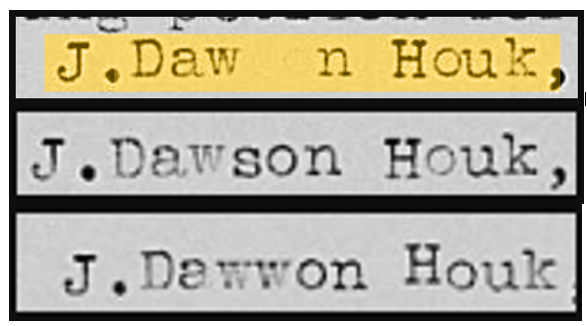
Here are the images.
0 -
@AnthonyHopkins5 And is that image from a Get Involved project? The answers you've received are really more about how we enter names in the tree. I think you're asking how you should enter the names when you're reviewing names in the project.
The general instructions for indexing are to type what you see.
0 -
Oof, I'll do it, but my OCD is gonna hate it XD
0 -
I was under the assumption that we spelled the name as it is in the document whether it is a variation of the name or not? If we assume it is the same name and change it then what is the purpose of indexing the document?
0 -
As @Áine Ní Donnghaile says above, both Indexing and Get Involved name spellings need simply to reflect what is on the historical record being looked at. The place to conflate different spellings, expand 'Wm', etc., is on the relevant Family Tree profile where the sources are brought together.
0


