Translation Request - Need a review of a Norwegian Translation

I, along with two cousins, have been assembling a book for printing on our great grandparents who emigrated from Lesja, Oppland, Norway and homesteaded in Minnesota. The book will contain about 280 pages based on research, more than 100 photos, certificates, newspaper clippings, etc. that our families have saved.
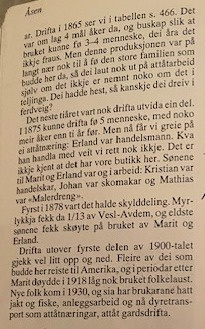
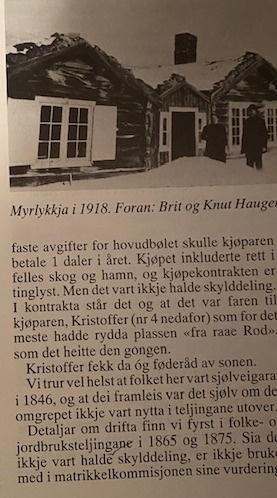
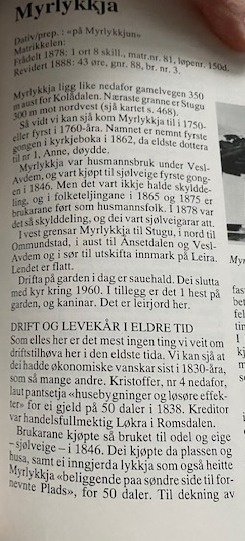
What I'm interested in are suggested revisions and/or corrections of a translation done a few years ago. The translation is from pages 495-496 of the Bygdebok for Lesja 2.
Kjelland, Arnfinn. Bygdebok for Lesja. 2 : Gards- og slektshistorie for nørdre del av Lesja hovudsokn. Lesja:Lesja kommune, 1992.
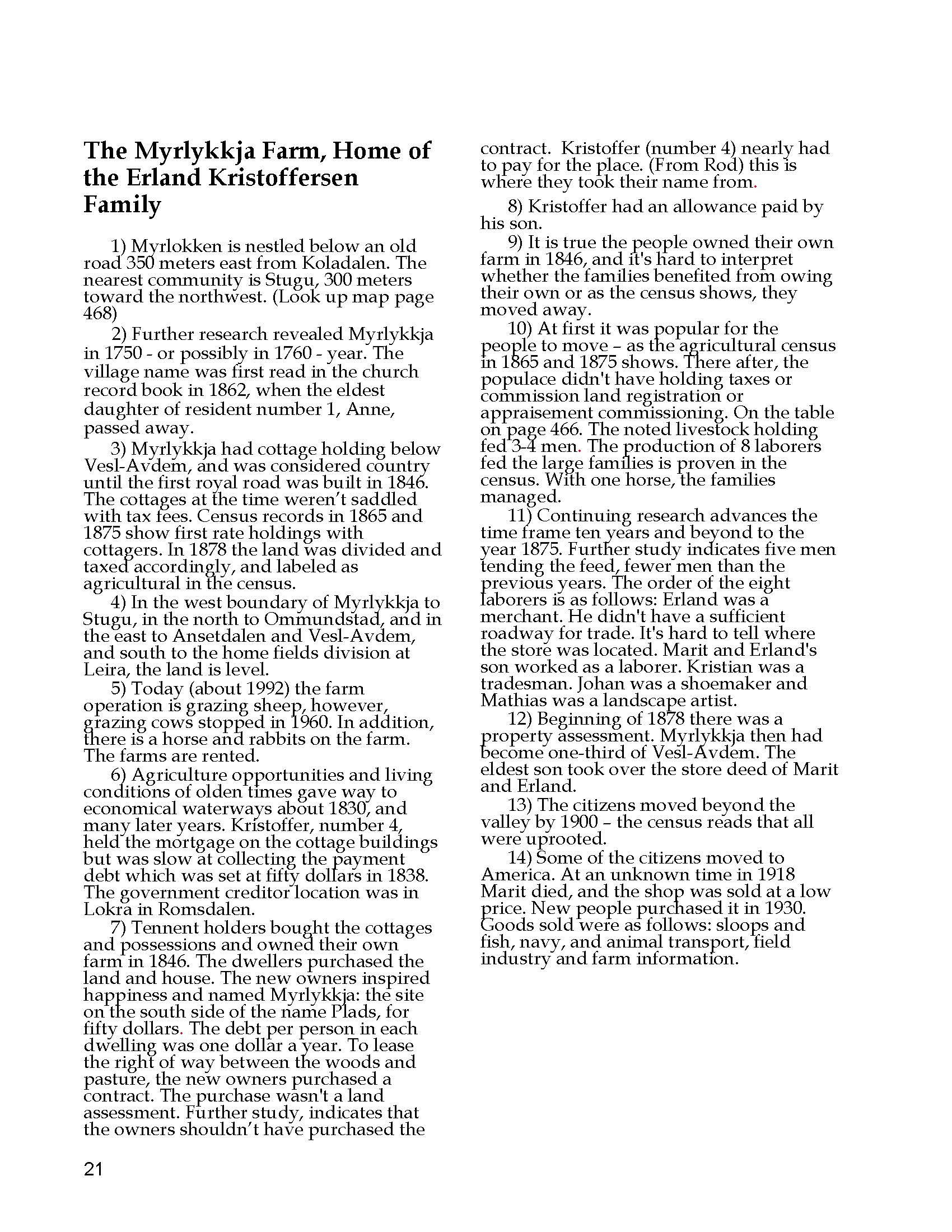
I believe the Bygdebok is available online but I'm unable to login to view it. So I've attached 4 images. 3 jpgs are from the book, and the 4th is the translation. I numbered the paragraphs of the translation as likely many are OK as written.
Thanks, Bonnie Weisel, Madison WI, USA
Online eBook - Bygdebok for Lesja. 2
https://www.nb.no/items/URN:NBN:no-nb_digibok_2007112804068
https://urn.nb.no/URN:NBN:no-nb_digibok_2007112804068
Book progress so far -
https://weisel-usa.com/wp-content/uploads/2025/01/FH-Book-Dalen3-v4-20250122.pdf
Comments
-
Here is my translation of the first three paragraphs. I'm not thrilled with the third one since the whole process of buying and selling and inheriting property in those days was kind of complicated. I hope others here can improve this. I'll work on more tonight.
1. Myrlykkja lies just below the old road 350 meters east of Kolådalen. Its closest neighbor is the Stugu farm which is 300 meter towards the northwest.
2. As far as we can determine, Myrlykkja was established in the 1750s or 1760s. The name is first found in the parish register for 1862 when the oldest daughter of farm number 1 died.
3. Myrlykkja was a tenant farm under Vesl-Avdem and was purchased as a self-owned farm for the first time in 1846. But the purchase documents were not completed and in the census for 1865 and 1875 the residents were again listed as tenant farmers. I 1878 the separation of the farms was completed and the residents were owners from then on.
0 -
I made some changes in paragraph 3 so I'll just put the whole thing here again. In the book, there is no division between your numbered paragraphs 13 and 14 so I left them as one paragraph. This was a joint effort between me and my Norwegian wife. I do hope you get some others in the board here to proofread this. Particularly the parts that deal with the real estate sections.
1. Myrlykkja lies just below the old road 350 meters east of Kolådalen. Its closest neighbor is the Stugu farm which is 300 meter towards the northwest.
2. As far as we can determine, Myrlykkja was established in the 1750s or 1760s. The name is first found in the parish register for 1862 when the oldest daughter of farm number 1 died.
3. Myrlykkja was a tenant farm under Vesl-Avdem and was purchased as a self-owned farm for the first time in 1846. But there was no official land assessment or survey completed and in the census for 1865 and 1875 the residents were again listed as tenant farmers. I 1878 the assessment of the farm was completed and the residents were listed as owners from then on.
4. To the west, Myrlykkja borders on Stugu, to the north to Ommundstad, to the east to Ånsetdalen, and Vesl-Avden, and to the south to fields belonging to Leira. The land is flat.
5. Today the farm operations consist of raising sheep. They stopped having cattle about 1960. In addition they have one horse and rabbits. The soil here is clay.
6. FARMING OPERATIONS AND LIVING CONDITIONS IN OLDEN TIMES As elsewhere in this area, there is almost nothing known about farm operations in the oldest times. We can see that they had economic difficulties in the 1830s like so many others. Kristoffer, (see farm No. 4 below), mortgaged “residential buildings and movable articles” for a debt of 50 daler in 1838. The creditor was the trading representative, Mr. Løkra, in Romsdalen.
7. The crofters bought the tenant farm for “inheritance and ownership”, that is, for their personally owned property, in 1846. They purchased the land and buildings as well as a fenced in paddock which was also named Myrlykkja “lying on the south side of the previously named lot,” for 50 daler. To cover the fixed expenses of the main farm house, the purchaser was required to pay 1 daler per year. The purchase included the right to use the communal woods and harbor and the contract of purchase was entered at the registration office. However, no assessor’s valuation and surveying of the property was carried out. In the contract it states also that it was the father of the purchaser, Kristoffer (see farm No. 4 below), who had for the most part developed the property “from ground up” as the expression was in those days.
8. Kristoffer was at that time receiving a pension from his son.
9. We believe that the people here were owners of the land in 1846 and continued to be so even though they were not called that in future census records.
10. Details about farm operations we first find in the population and farming censuses of 1865 and 1875. Since the land assessment had never been completed, the property is not listed in the tax commissions valuation lists. Its operations in 1865 can be seen in the table on page 466. It had about 4 mål of cultivated fields then and livestock such that it could support 3 to 4 people those years it did not freeze. But this production was far from able to support the large family that lived here, so they certainly must have hired themselves out for additional work although this is not mentioned in the census. They had a horse, so maybe they worked in transport?
11. Over the next decade operations were expanded somewhat. In 1875 its operations could support 5 people with somewhat more fields than ten years previously. But now we have information about additional employment. Erland was a merchant. What type of merchant he was we don’t know. It is not known if there was a store in the area. Marit and Erland's sons were also employed. Kristian was a merchant, Johan was a shoemaker, and Mathias was a painter’s assistant.
12. First in 1878 was the property assessed and surveyed. Myrlykkja was established then as 1/13 of Vesl-Avdem. The oldest sons of Marit and Erland were designated as inheritors of the property.
13. Farm operations during the first part of the 1900s were up and down. Many of the people who lived here emigrated to America and in the period after Marit died in 1918 the farm did not have any people living there. New owners came in 1930 and since then they have had hunting, fishing, construction work, and now animal transport as employment in addition to farming.
0 -
I went through this one more time this morning and fixed a few typographical errors, smoothed out some phrasing, fixed word order to read better in English, added a few of the possessive apostrophes that Norwegian doesn't use which I accidentally left out, and double checked the translation. I think it's as good as I can get it. Hope this helps your project and wish you well on its completion.
1. Myrlykkja lies just below the old road 350 meters east of Kolådalen. Its closest neighbor is the Stugu farm which is 300 meter towards the northwest.
2. As far as we can determine, Myrlykkja was established in the 1750s or 1760s. The name is first found in the parish register for 1862 in the death record for the oldest daughter of farm number 1.
3. Myrlykkja was a tenant farm under Vesl-Avdem and was purchased as a self-owned farm for the first time in 1846. But there was no official land assessment or survey completed and in the census for 1865 and 1875 the residents were again listed as tenant farmers. In 1878 the assessment of the farm was completed and the residents were listed as owners from then on.
4. To the west, Myrlykkja borders on Stugu, to the north on Ommundstad, to the east on Ånsetdalen, and Vesl-Avden, and to the south on fields belonging to Leira. The land is flat.
5. Today the farm operations consist of raising sheep. They stopped having cattle about 1960. In addition they have one horse and rabbits. The soil here is clay.
6. FARMING OPERATIONS AND LIVING CONDITIONS IN OLDEN TIMES As elsewhere in this area, there is almost nothing known about farm operations in the oldest times. We can see that they had economic difficulties in the 1830s like so many others. Kristoffer, (see farm No. 4 below), took out a mortgage on the “residential buildings and movable articles” for a debt of 50 daler in 1838. The creditor was the trading representative, Mr. Løkra, in Romsdalen.
7. The crofters bought the tenant farm for “inheritance and ownership,” that is, for their personally owned property, in 1846. They purchased the land and buildings as well as a fenced paddock which was also named Myrlykkja “lying on the south side of the previously named lot,” for 50 daler. To cover the fixed expenses of the main farm house, the purchaser was required to pay 1 daler per year. The purchase included the right to use the communal woods and harbor and the contract of purchase was entered at the registration office. However, no assessor’s valuation and surveying of the property was carried out. In the contract it states also that it was the father of the purchaser, Kristoffer (see farm No. 4 below), who had for the most part developed the property “from ground up” (the literal translation might be: “from the raw roots”) as the expression was in those days.
8. Kristoffer was at that time was also receiving a pension from his son.
9. We believe that the people here were owners of the land in 1846 and continued to be so even though they were not called that in future census records.
10. Details about farm operations we find first in the population and agricultural censuses of 1865 and 1875. Since the land assessment and division had never been completed, the property is not listed in the tax commission’s valuation lists. Its operations in 1865 can be seen in the table on page 466. It had about 4 mål of cultivated fields then and livestock such that it could support 3 to 4 people those years it did not freeze. But this production was far from able to support the large family that lived here, so they certainly must have hired themselves out for additional work although this is not mentioned in the census. They had a horse, so maybe they worked in transport?
11. Over the next decade operations were expanded somewhat. In 1875 its operations could support 5 people with somewhat more cultivated acres than ten years previously. But now we have information about additional employment. Erland was a merchant. What type of merchant he was we don’t know. It is not known if there was a store in the area. Marit and Erland's sons were also employed. Kristian was a merchant, Johan was a shoemaker, and Mathias was a painter’s assistant.
12. First in 1878 the property was assessed and surveyed. Myrlykkja was established then as 1/13 of Vesl-Avdem and the oldest sons of Marit and Erland were designated as inheritors of the property.
13. Farm operations during the first part of the 1900s were up and down a bit. Many of the people who lived here emigrated to America and in the period after Marit died in 1918 no people were living at the the farm. New owners came in 1930 and since then they have been employed in hunting, fishing, construction work, and now animal transport in addition to farming.
0